How Many Dudes Act 1 Build — Hacker, Construction and Warlock Route
Direct answer: use Construction Dudes to hold the front, Warlocks to absorb and redirect pressure through Pact, Hackers as the scaling burst core, and one Explorer plus two Mutants for automatic healing. In the documented run, the decisive route was Smelling Salts → Firewall → Half-Full Glass → White Hat → Lunch Pail → Jazz Flute → Tinderbox, with free Dude Juice claimed at the Round 5 merchant and expensive shop Relics delayed until Round 15.
Firsthand evidence boundary: the site owner played and documented this PC full-release run. The supplied screenshots cover The Flats, Act 1 through the Round 20 recruitment, Relic, Trinket, and consumable decisions. The exact executable build, mode, and Tier were not recorded, and the supplied package does not include a victory-results screen. Treat this as a reproducible Rounds 1–20 route, not proof that the same sequence is universally best or that RNG will reproduce every offer.
Build at a glance
Section titled “Build at a glance”| Job | Dude Type | Why it is in this route |
|---|---|---|
| Frontline | Construction Dude | Starts with 200 Max HP and can Taunt through Hammer Toss; Lunch Pail adds a repeatable full-heal trigger after accumulated damage. |
| Pressure routing | Warlock Dude | Pact slows incoming damage and can expel stored damage while Taunting the target. |
| Burst carry | Hacker Dude | Exploit stores a burst every four seconds; Firewall, White Hat, Crit, and attack-frequency support keep the engine alive and productive. |
| Emergency healing | Explorer Dude | Canteen reacts when a Roster Dude drops below 30% HP and refills over time. |
| Distributed healing | Mutant Dude | Floofballs attach to endangered Roster Dudes and burst into healing; up to four can sit on one Dude. |
| Early filler | Regular Dude | Fills cheap early capacity while the core Flyers and upgrades arrive. |
The current definitions above were rechecked against the official Hacker, Construction, Warlock, Explorer, and Mutant Dudex entries on 9 August 2026. The route choices below come from the owner’s screenshots and notes.
Rounds 1–5: build a floor before chasing damage
Section titled “Rounds 1–5: build a floor before chasing damage”- Recruit a Construction Dude early. Its 200 Max HP gives the small roster a durable first contact point.
- Add Warlocks before the first merchant. The Round 5 screenshot records three active Warlocks and one active Construction Dude, with the initial Regular Dude unconscious.
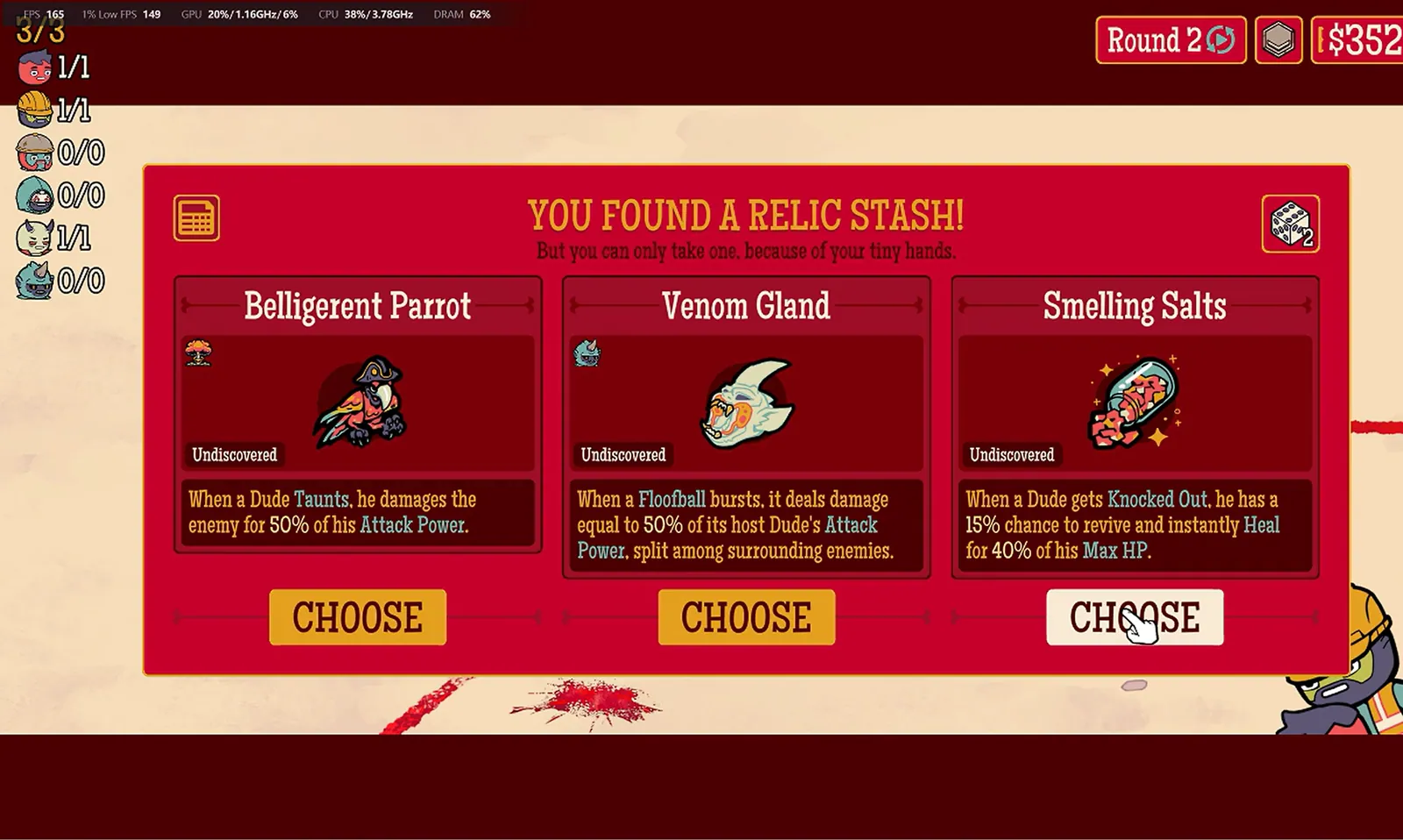
- Take Smelling Salts at Round 2. In the captured offer, it gives any Dude who gets Knocked Out a 15% chance to revive immediately and heal for 40% of Max HP. That is a general recovery layer, not a guarantee.
- Prefer the safer encounter when several Dudes are already unconscious. Higher-payout waves accelerate the build only if the reduced roster can still win.
Round 5 merchant rule
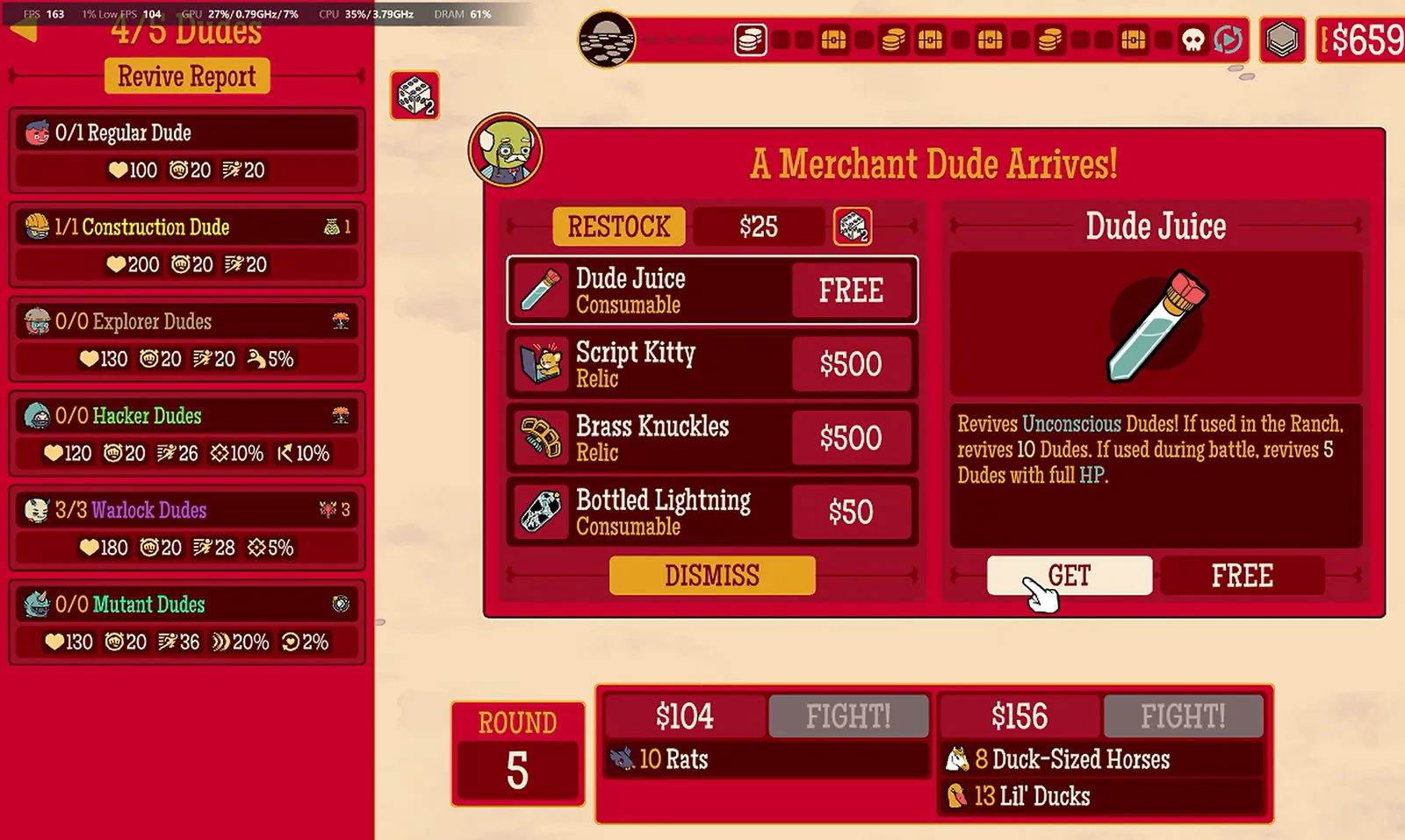
Section titled “Round 5 merchant rule”Claim the free Dude Juice shown in the merchant screen. The earlier draft said to claim it “every round,” but the evidence only supports claiming it on the merchant visit when the free offer appears. Do not spend it automatically: the developer’s full-release guide advises conserving Dude Juice when the reduced team can safely continue.
The same Round 5 shop offered Script Kitty and Brass Knuckles for $500 each. This route skipped an early expensive Relic purchase and preserved cash for recruiting and later shop power.
Rounds 6–10: open Hacker and Mutant, then protect the carry
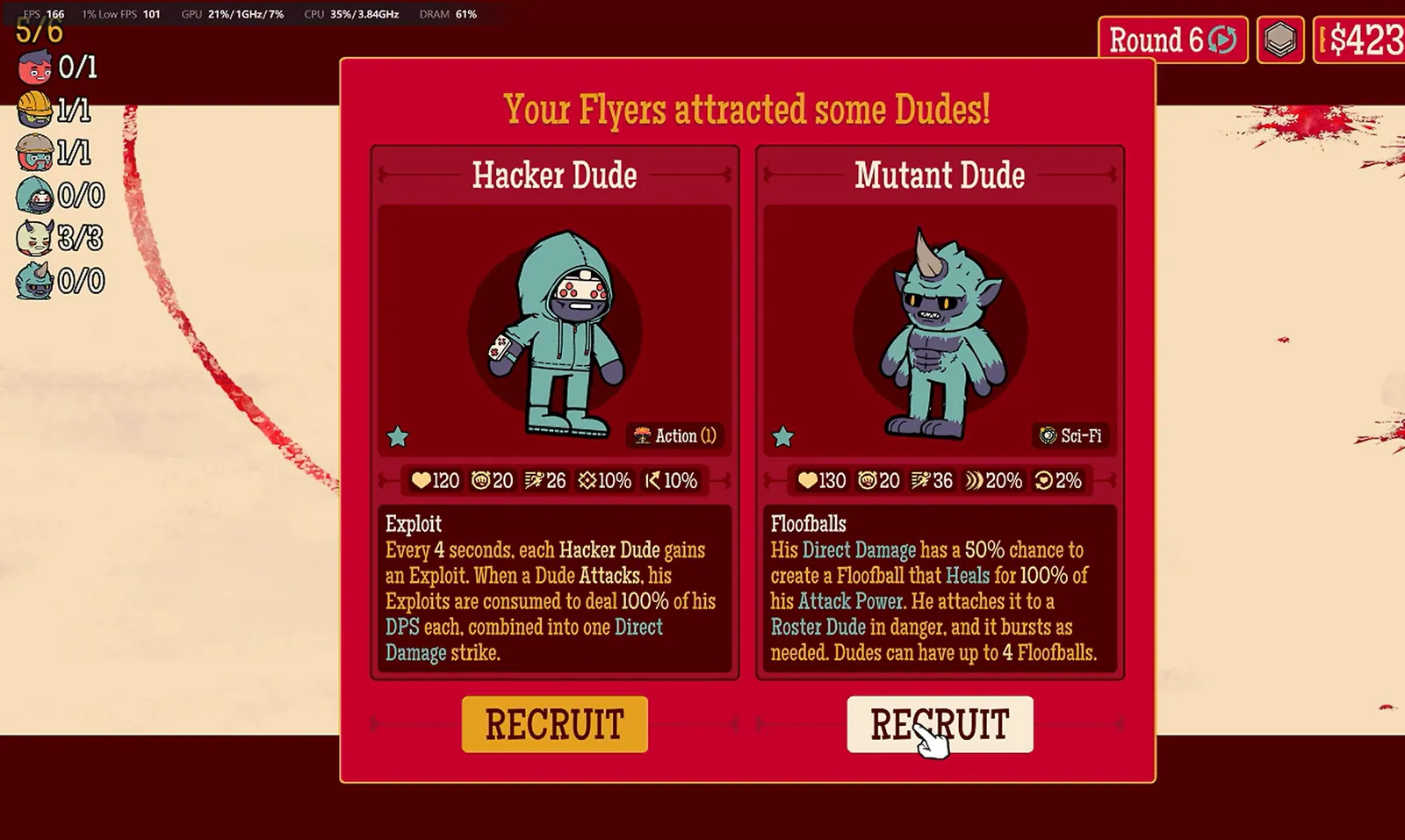
Section titled “Rounds 6–10: open Hacker and Mutant, then protect the carry”Between Rounds 6 and 9, the run opened the Mutant and Hacker Flyers while continuing to add Construction and Warlock capacity. The goal is not six equal stacks: it is one frontline, one pressure-routing layer, a growing Hacker carry, and enough automatic healing to prevent a single bad hit from snowballing.
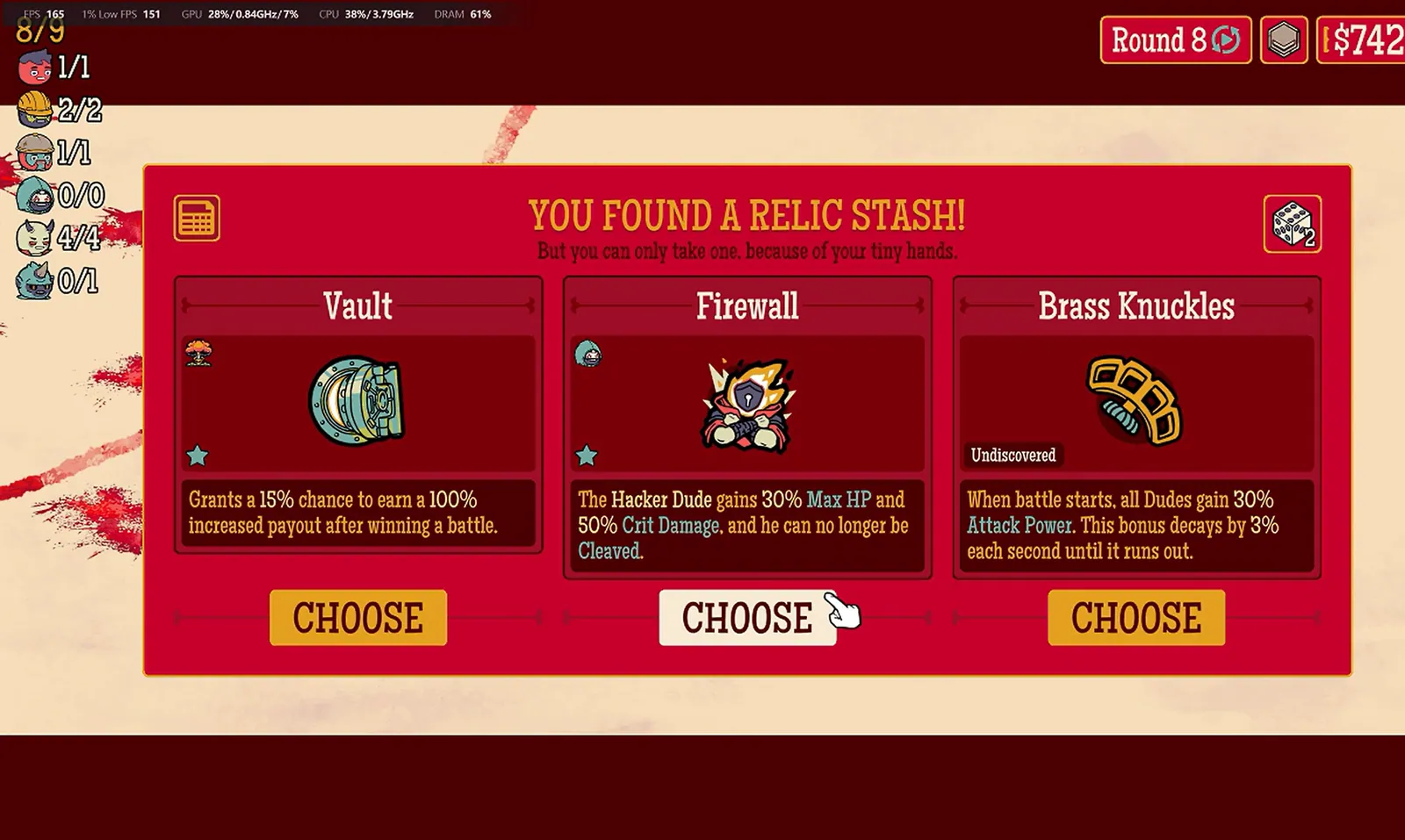
Round 8: choose Firewall
Section titled “Round 8: choose Firewall”The captured Round 8 offer was Vault, Firewall, and Brass Knuckles. Firewall was selected. The current Dudex wording says Hacker gains 30% Max HP and 50% Crit Damage and can no longer be Cleaved. That corrects the draft’s older shorthand that said “cannot be debuffed.”
Why it fits this route:
- Max HP makes the main damage Type less vulnerable to a sudden collapse.
- Crit Damage rewards later Crit Chance without requiring the build to buy an early $500 Relic.
- Cleave immunity helps keep grouped Hackers from sharing that incoming damage channel.
At the Round 10 merchant, prioritize recovery only if the roster is genuinely threatened. A Health Potion heals half the roster for 50% Max HP, starting with the most injured, and converts overhealing to Temporary Health. It is a situational bridge, not a mandatory purchase in every seed.
Rounds 11–14: turn survival into a stable engine
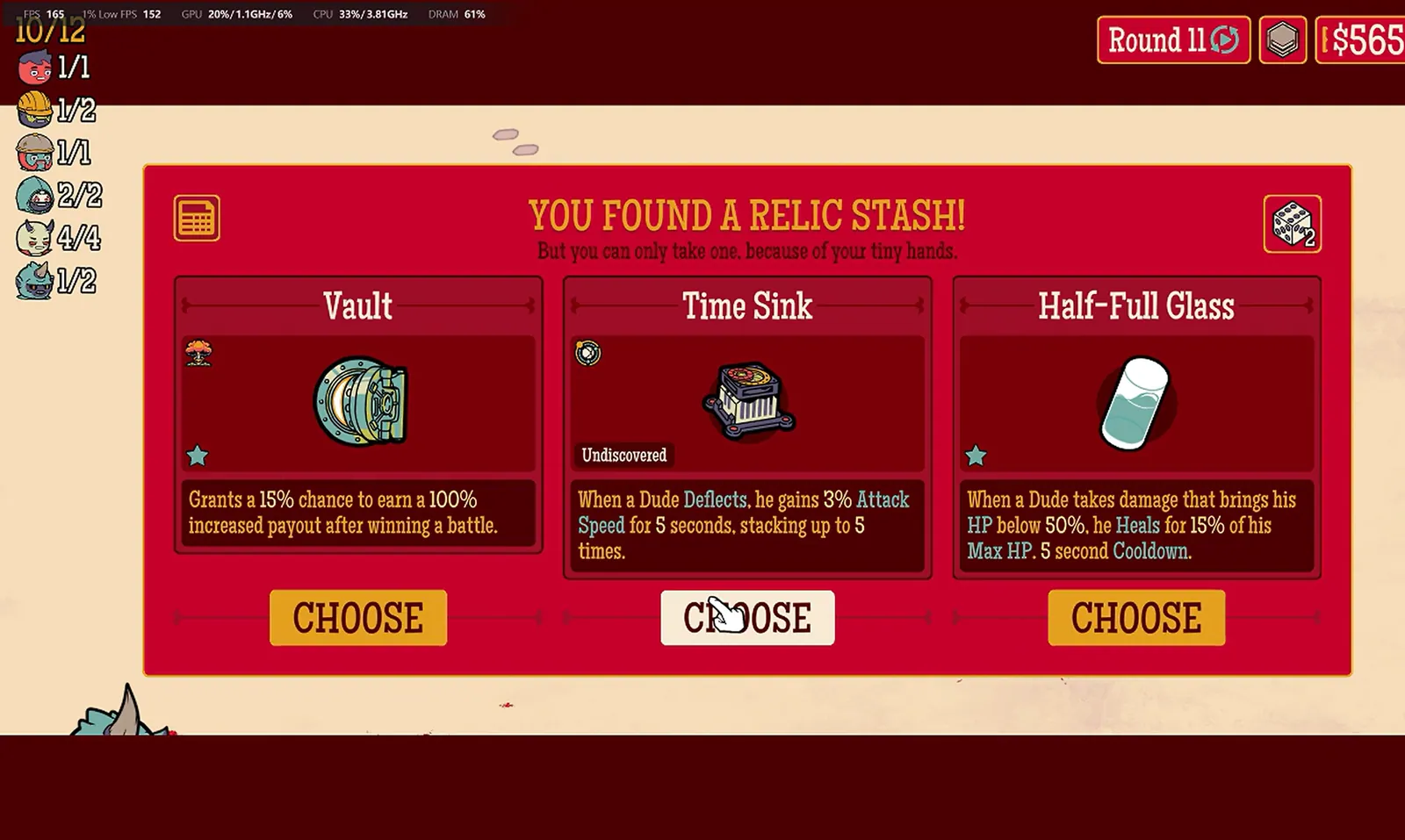
Section titled “Rounds 11–14: turn survival into a stable engine”Round 11: Half-Full Glass
Section titled “Round 11: Half-Full Glass”The run selected Half-Full Glass over Vault and Time Sink. In the screenshot, a Dude that takes damage bringing it below 50% HP heals for 15% of Max HP on a five-second cooldown. This supports every Type and gives the frontline and Pact layers more time to work.
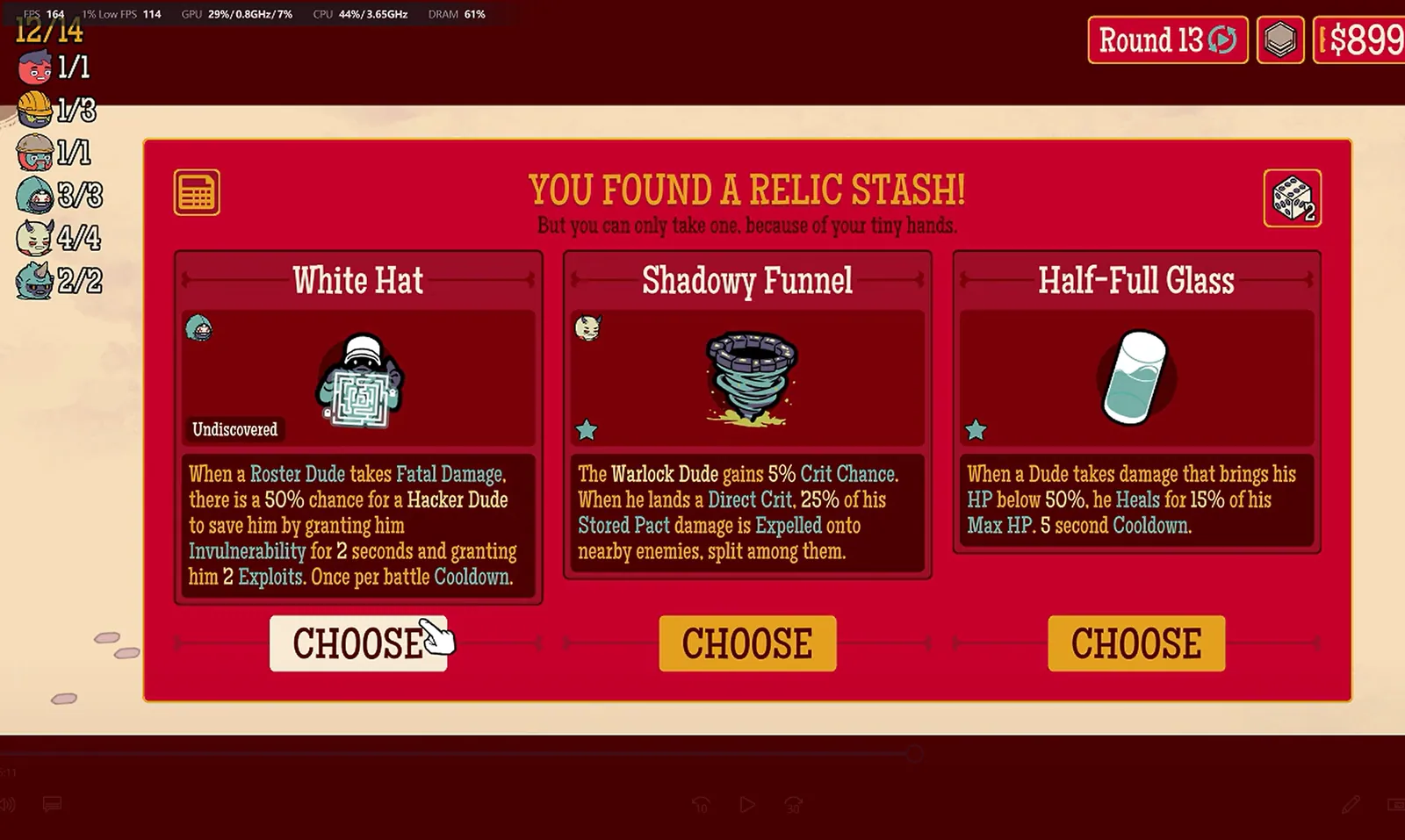
Round 13: White Hat
Section titled “Round 13: White Hat”The run then selected White Hat. Its current effect gives a 50% chance for a Hacker to save a Roster Dude taking Fatal Damage, granting two seconds of Invulnerability and two Exploits, once per battle. It does two jobs at once: emergency protection and more stored Hacker burst.
When choosing between enemy groups in this phase, take the higher payout only when the current active roster can cover the enemy profile. The documented run accepted a 59 Duck-Sized Horses option later, but one successful choice is not proof that the same enemy count is safe for every team state.
Round 15 merchant: buy the frontline sustain piece
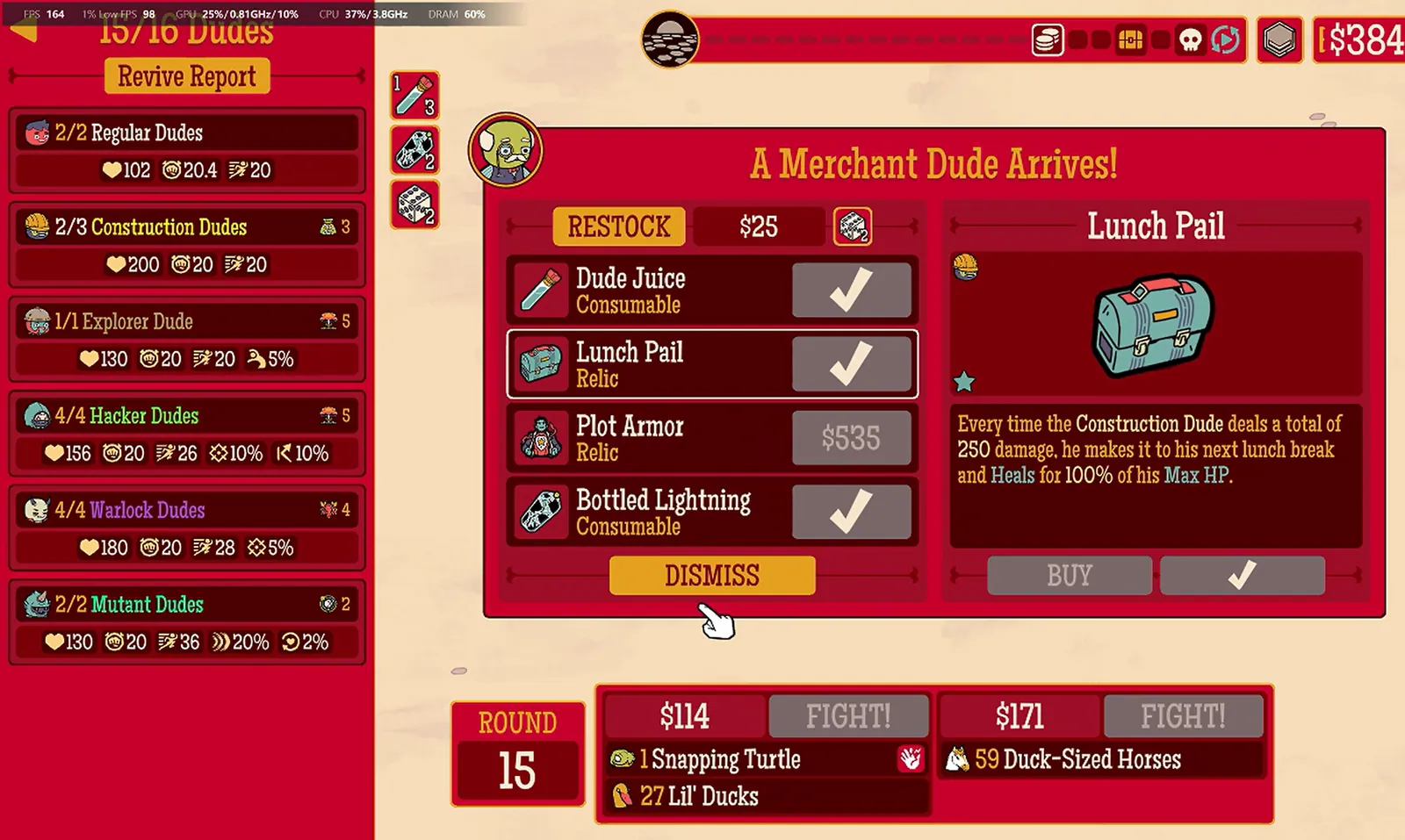
Section titled “Round 15 merchant: buy the frontline sustain piece”This is the first captured shop where the route spends heavily on a core Relic. Lunch Pail was bought for Construction Dude, and Bottled Lightning was stocked as an emergency area-damage/stun consumable.
Lunch Pail’s captured effect: every time Construction Dude deals a total of 250 damage, he reaches his next lunch break and heals for 100% of Max HP. It is a Relic—not a “sustain consumable” as the draft initially grouped it—and it turns the existing tank stack into a recurring self-recovery layer.
Rounds 16–20: fill the documented caps and add insurance
Section titled “Rounds 16–20: fill the documented caps and add insurance”Continue adding levels to the Types already doing jobs instead of opening another unrelated Type. The final Round 20 screenshots record these Flyer caps:
| Dude Type | Recorded cap | Route job |
|---|---|---|
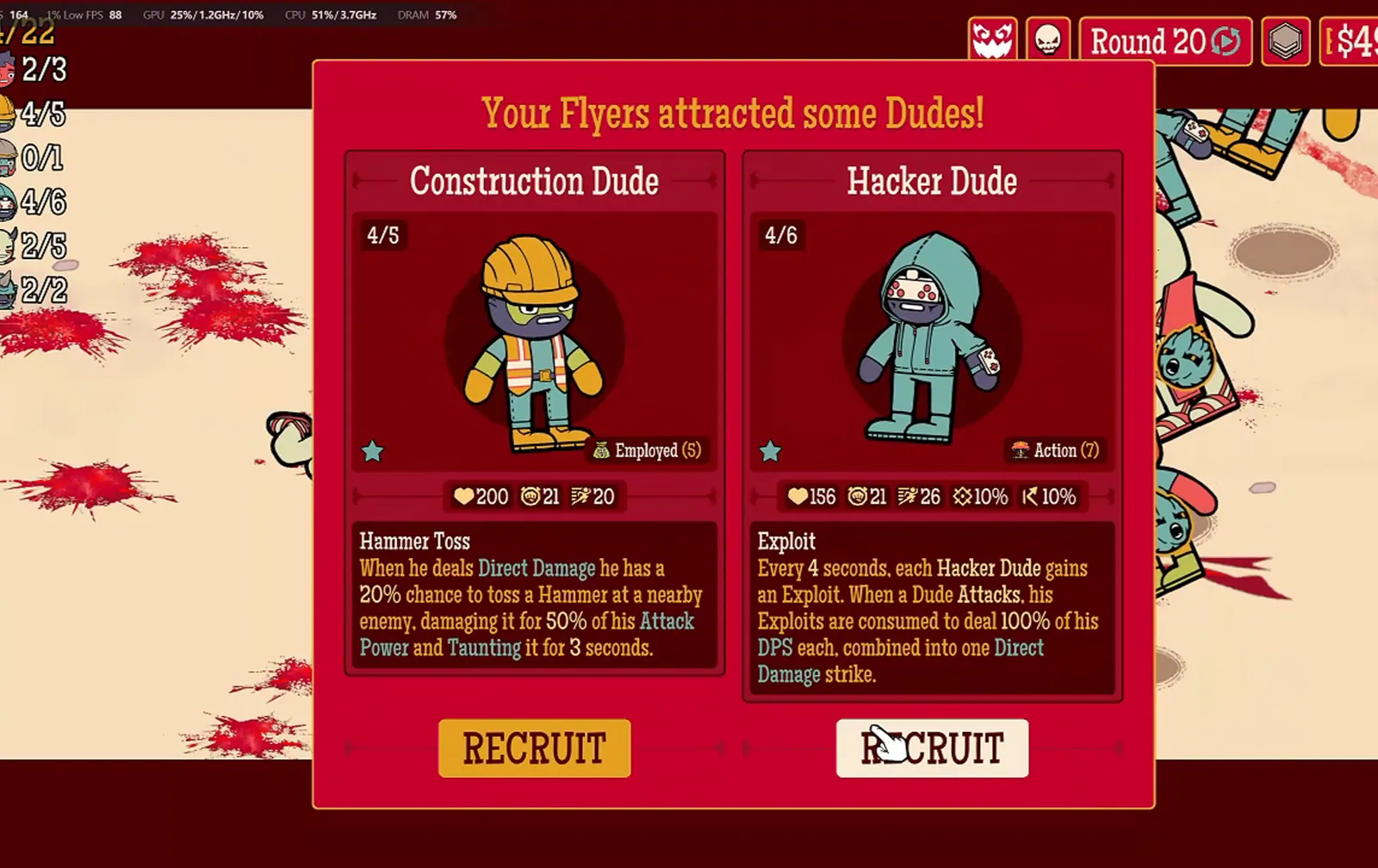
| Regular | 4 | Cheap capacity and early filler |
| Construction | 5 | Frontline and Lunch Pail sustain |
| Explorer | 1 | Canteen emergency healing |
| Hacker | 7 | Main burst stack |
| Warlock | 5 | Pact pressure routing and Taunt |
| Mutant | 2 | Floofball healing |
| Total | 24 | The sum is the recorded maximum roster capacity, not a claim that all 24 were conscious. |
Round 18: Jazz Flute
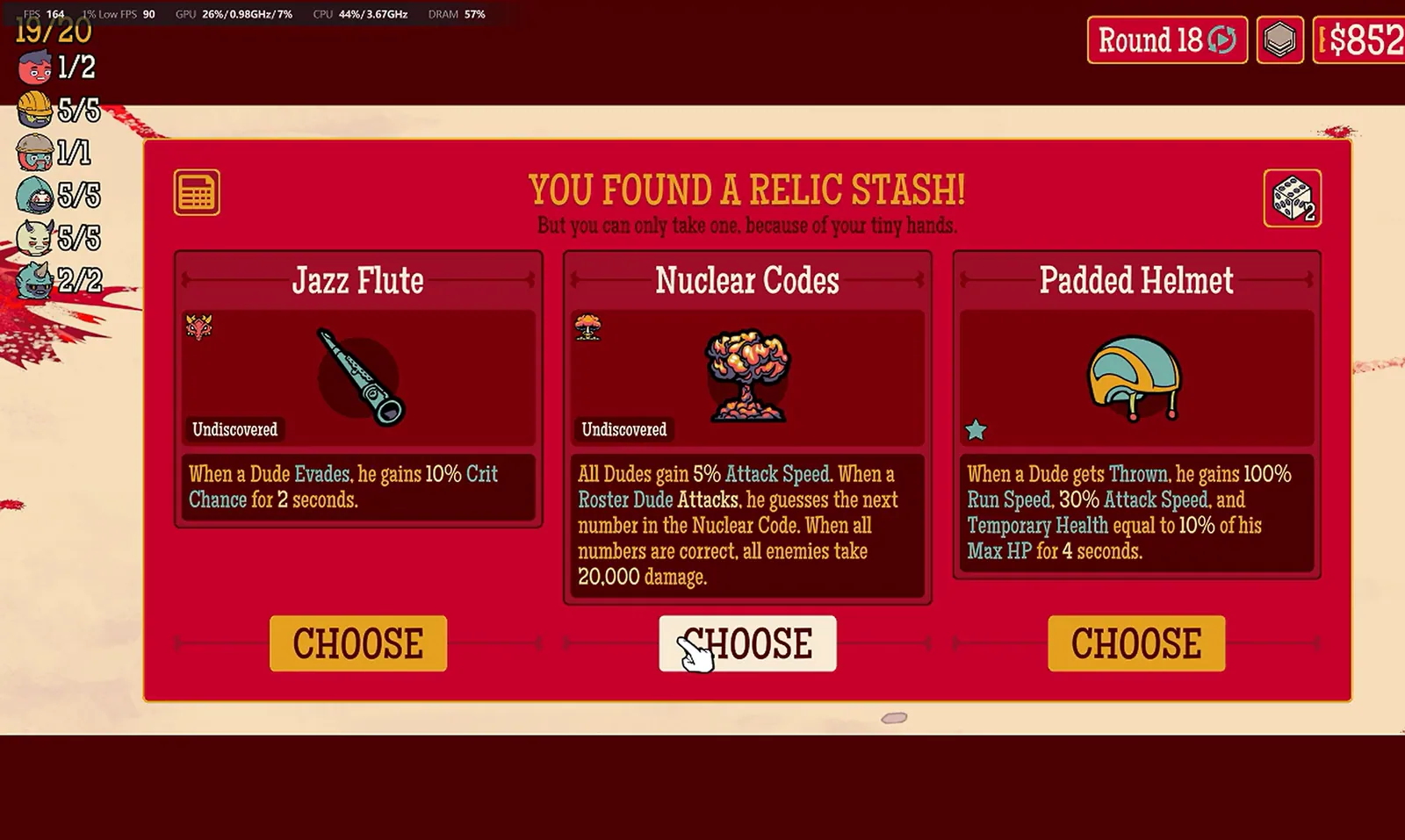
Section titled “Round 18: Jazz Flute”Jazz Flute grants a Dude 10% Crit Chance for two seconds after that Dude Evades. It is a Fantasy-family Relic, not a Hacker-only item. In this route it adds another route to Crit for an already Crit-Damage-supported Hacker stack, but the trigger still depends on Evasion.
Round 20: Tinderbox and Ear Gauges
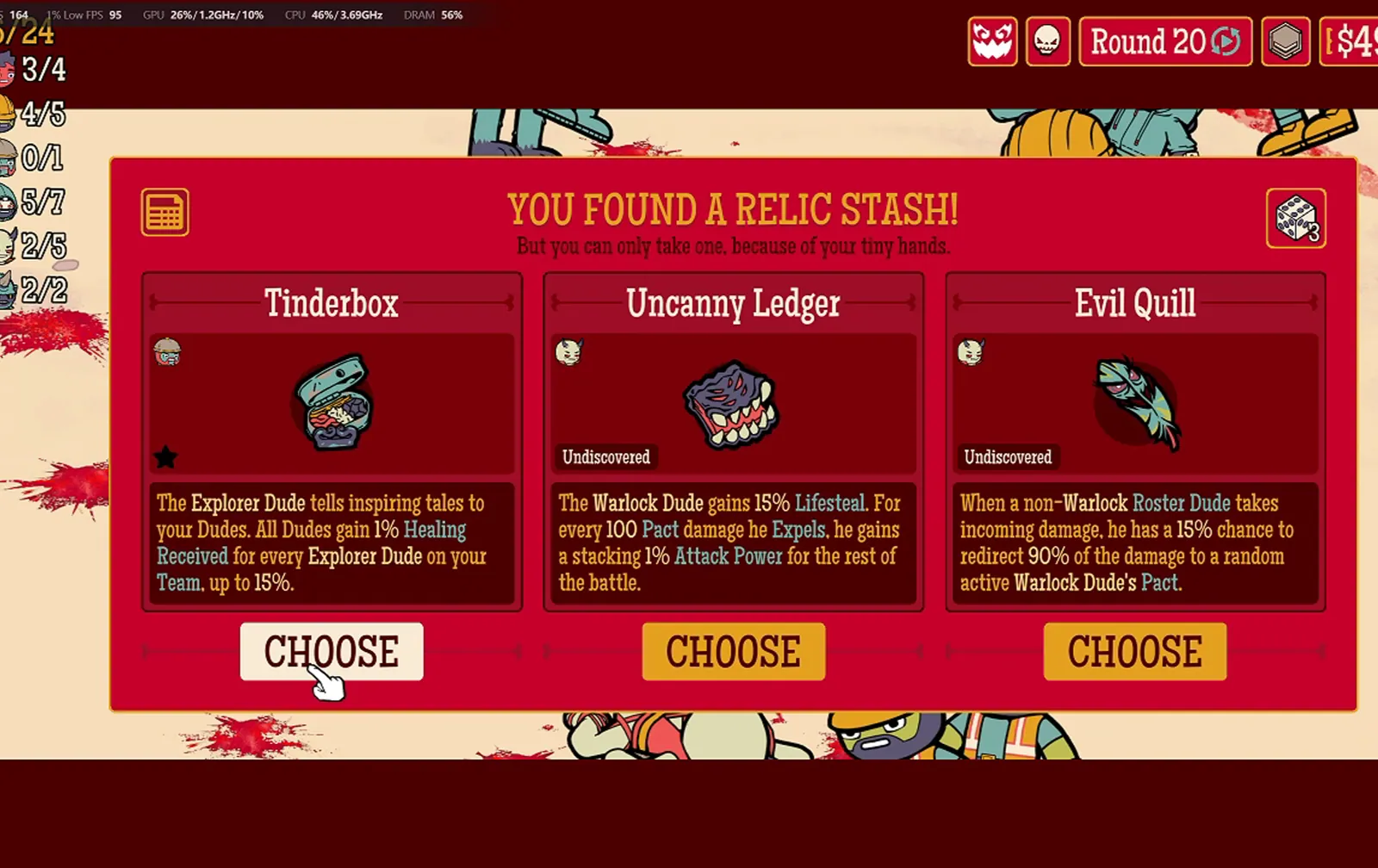
Section titled “Round 20: Tinderbox and Ear Gauges”The documented Relic choice is Tinderbox: all Dudes gain 1% Healing Received per Explorer Dude on the team, capped at 15%. With one Explorer in this route, the effect is modest but unconditional.
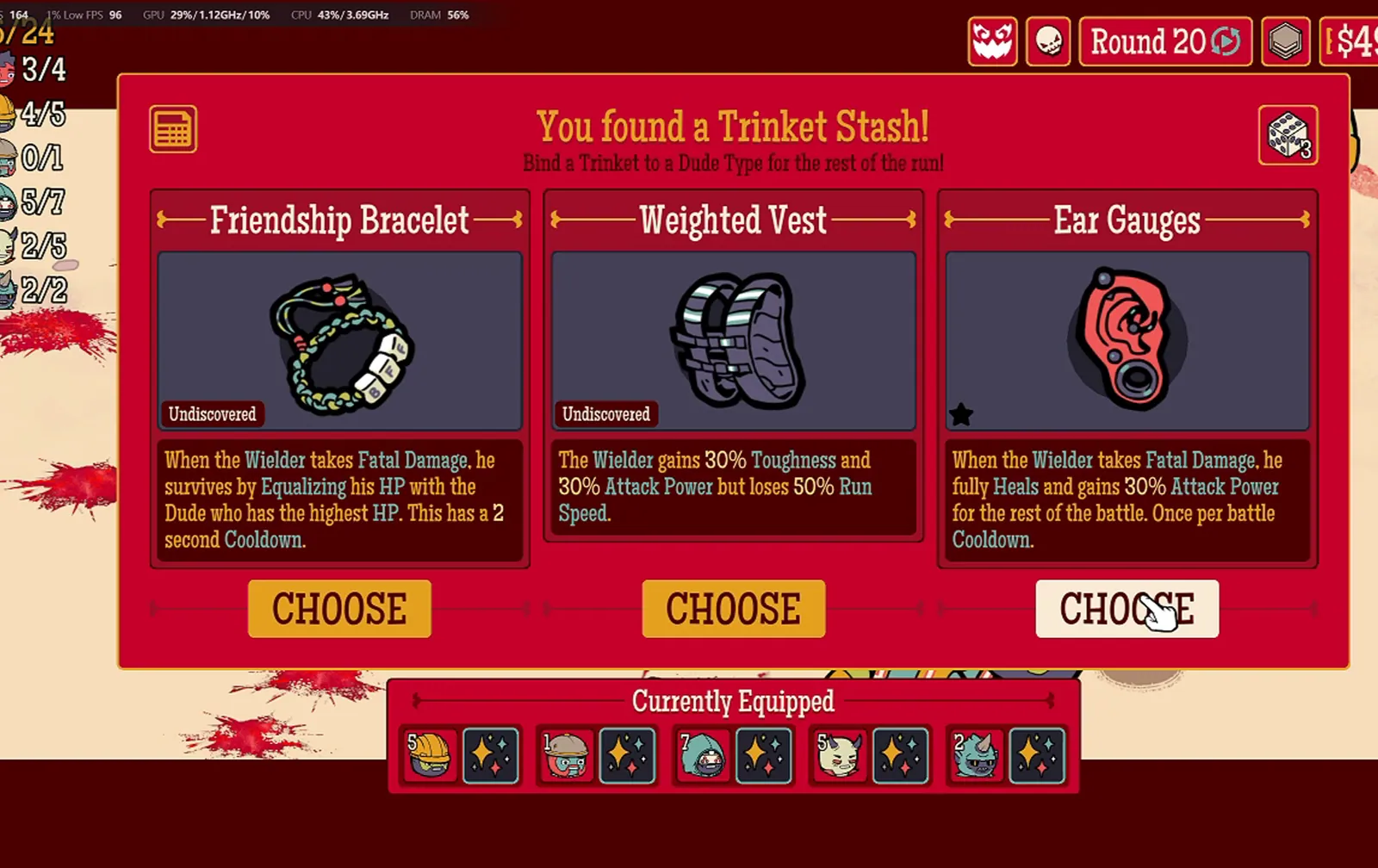
The Trinket screen offers Friendship Bracelet, Weighted Vest, and Ear Gauges. Ear Gauges fully heals its wearer after Fatal Damage and grants 30% Attack Power for the rest of the battle, once per battle. The owner’s notes say it was intended for Hacker; the supplied screenshot proves the choice screen and the open binding workflow, but does not include the final confirmation state. The draft name “Earmuffs” has been corrected to the in-game name.
Combat and consumable rules
Section titled “Combat and consumable rules”- Let Construction meet the first contact. Hammer Toss can Taunt; Warlock Pact also redirects and slows incoming pressure.
- Do not describe Floofballs as shields. The current Mutant definition says they heal endangered Roster Dudes; separate Relics may add other defensive effects.
- Use Dude Juice for an actual collapse. In the Ranch it revives up to ten Dudes; during battle it revives five with full HP in the captured item text. Saving it can be stronger than spending it on every unconscious unit.
- Use Bottled Lightning as a high-variance emergency tool. The developer guide says it can remove one or two large enemies or a larger group of weak enemies and stun them; it is not guaranteed to clear a named wave.
- Keep Health Potion as pre-emptive protection when needed. Overhealing becomes Temporary Health, so full green bars do not always mean the consumable has no value.
What to do when RNG changes the route
Section titled “What to do when RNG changes the route”| Missing piece | Safe substitution for Act 1 | What not to assume |
|---|---|---|
| No Firewall | Take general Max HP, Toughness, Temporary Health, or a credible cheat-death layer and keep upgrading Hacker | Do not assume Crit Damage alone fixes Hacker survival. |
| No Half-Full Glass | Lean harder on Explorer/Mutant sustain and reduce encounter risk while the roster is injured | Do not buy every consumable and destroy the Round 15 economy. |
| No White Hat | Protect Hackers directly and preserve Dude Juice for a real fatal cascade | Do not call the build dead; White Hat is a chance-based once-per-battle save. |
| No Lunch Pail | Add Construction durability and healing support, or spend Round 15 cash elsewhere if another core Type is failing | Do not pay $500+ merely because the shop calls an item a Relic. |
| No Jazz Flute | Take a team-wide effect that covers the current failure mode | Do not overvalue Jazz Flute without meaningful Evasion. |
The Relic-pool guide explains how Flyers and represented Families broaden the documented pool and why an exact sequence cannot be forced reliably.
Is this the best How Many Dudes build?
Section titled “Is this the best How Many Dudes build?”It is a documented early-game build, not a universal tier-list winner. Current Google and YouTube demand clearly includes “best build,” “best team,” and “best strategy,” but this page preserves the evidence boundary: one owner-played route through Round 20 cannot rank every full-release team.
Should I always choose the higher-gold enemy group?
Section titled “Should I always choose the higher-gold enemy group?”No. Higher payout accelerates recruiting and shop purchases only when the active roster can still win. Current injuries, enemy type, and missing recovery pieces matter more than one successful 59-enemy screenshot.
Does this prove an Act 1 clear?
Section titled “Does this prove an Act 1 clear?”The owner notes describe the route as an Act 1 walkthrough, and the screenshots reach Round 20 preparation. The supplied evidence package does not include the post-fight victory screen, so this page does not present a screenshot-backed clear claim.
Why use both Explorer and Mutant?
Section titled “Why use both Explorer and Mutant?”They react to different healing conditions: Explorer’s Canteen triggers below 30% HP and refills over time; Mutant creates Floofballs through Direct Damage and attaches them to endangered Dudes. Together they reduce reliance on one recovery trigger.
Sources and update triggers
Section titled “Sources and update triggers”- Firsthand source: site-owner PC gameplay screenshots and notes, supplied and reviewed 9 August 2026; executable build, mode, Tier, and result screen not captured.
- Current mechanics: official Dudex entries linked above, checked 9 August 2026.
- General economy, Dude Juice, Relic-pool, consumable, and build principles: developer Top 10 Tips for Newbie Dudes, checked 9 August 2026.
Recheck this route after an official change to Hacker, Construction, Warlock, Explorer, Mutant, any named Relic/Trinket, merchant cadence, Act structure, or roster caps. A future rerun should record mode, Tier, executable version, final Round 20 roster, and the result screen.
Next steps
Section titled “Next steps”- Continue the same six-Type direction through the recorded Rounds 21–60 progression.
- See how the later roster failed in the Tier 1 Round 94 analysis.
- Understand why the exact Relic sequence varies with the Relic-pool guide.
- Compare a different current-release engine in the Lich build and Thrall guide.
- Cover the longer-run economy and boss checks in the full-release starter checklist.
- Verify exact current wording in the official Dudex.
- Send a versioned correction or a complete result screen through Contact and Corrections.